Casio Dg20 Manual
Buy Casio Dg-20 Guitar Synth Midi Controller Dg20. A manual is hardly needed but a copy of the manual is included anyway in pdf format The DG-20. CASIO DG1/10/20 The DG stands for DIGITAL GUITAR in case you had not guessed and you are likely to. The PDF manuals for these machines can. CASIO DG10 DG20 MIDI.
I bought a digital Midi guitar a few years ago thinking that it would be a cheap way to input Midi data into my sequencer using guitar fingering. I was partially right, but the feel of the instrument is not quite the same as a real guitar. Gp-pro Ex 3.1 Keygen there. The pressure-sensitive fingerboard is certainly unique, as I don’t know of any other controller that detects input in quite the same way. My particular instrument was purchased on eBay from a person whom I think really didn’t know much about the guitar or its history. When I got it I noticed that the neck was bowed and there were several dead spots on the fretboard. All in all, it was in working order though, so given the rarity of these things I wasn’t too devastated.

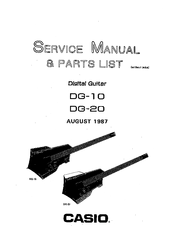
I have made one previous attempt at tearing the guitar down in order to see if I can fix it. I didn’t have time to completely figure out how to get the neck off of the guitar in order to see what was wrong with it. Here I will document the second teardown attempt, which has been successful so far. Step 1 – Remove the back of the guitar In order to get started, we need to remove the back of the guitar.
There are components attached to both halves of the guitar, so it may be more accurate to say that we are just opening the thing up, or splitting the halves open. Remove all of the screws in the back except for the screw that holds the strap button on. Note that the metal back plate that attaches the heel of the neck must be removed in order to open the guitar up. Step 2 – Remove the neck Once we have the guitar open, in order to remove the neck we need to remove the two screws that are still holding the neck on that are located in the area between the heel posts that stick up toward the back of the instrument. There are also three nuts that must be removed. The nuts are located just to the right of the heel of the neck in the picture above. These nuts hold the metal stay that keeps the rubber contacts of the fretboard in contact with the ‘common’ wiring.
Comments are closed.